What is NIST 800-204D?
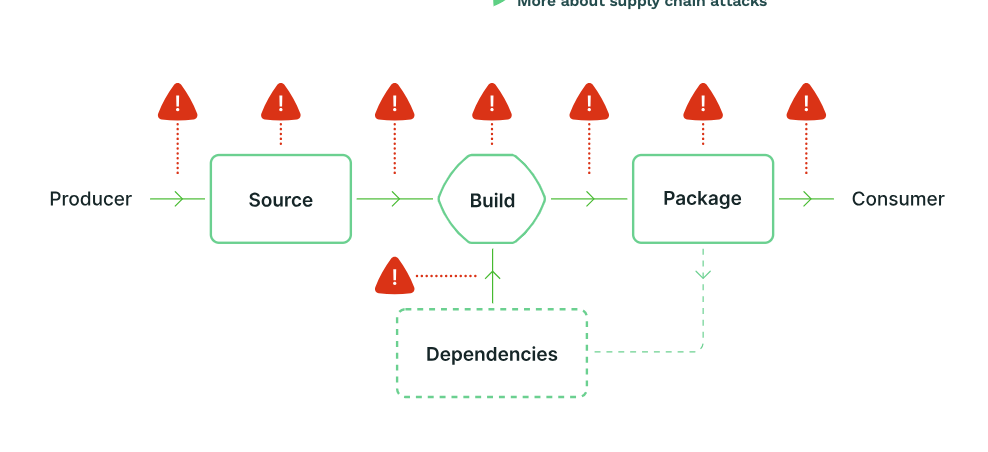
It is part of the NIST Special Publication series focused on cloud-native application security. It focuses on securing software supply chains within DevSecOps CI/CD pipelines used for cloud-native applications.
Why is it important
- NIST SP 800-204D serves as a roadmap for organizations to enhance security throughout the software development lifecycle (SDLC).
- It emphasizes considering security at every step, from writing initial code to deploying the final software version2.
- By integrating security measures into CI/CD pipelines, organizations can automate compliance, ensure artifact integrity, and enhance the overall security posture.
Steps to acheive compliance with NIST 800-204D?
Key steps included in the NIST publication are.
General recommendations
- Regularly applying patches and updates to software and systems to address known vulnerabilities and enhance security.
- Capturing and managing dependencies of artifacts in a central repository to ensure they are up to date and free from vulnerabilities.
- Implementing robust authentication mechanisms and granular authorization controls to ensure only authorized users have access to sensitive resources and functionalities
- Implementing encryption, access controls, and data loss prevention measures to safeguard sensitive data throughout the SDLC.
- Implementing logging, monitoring, and auditing mechanisms to detect and respond to security incidents and track changes to software artifacts and systems.
- Ensuring compliance with relevant security standards and regulations, such as OWASP Top Ten, SP 800-53, HIPAA, and PCI DSS (industry dependent).
- Establish trusted sources for OSS and verify digital signatures to ensure software authenticity. Even better, use internal repositories if possible.
- Conduct regular vulnerability scans and dependency checks and audit the CI/CD processes.
#### SevSecOps and CI/CD recommendations
- Strengthening the execution environment (e.g., VMs or pods) minimizes the attack surface, safeguarding the pipeline from potential threats.
- Clearly establishing roles for individuals managing the CI/CD pipelines, such as application updaters, package managers, and deployment specialists, ensures a structured and secure pipeline operation.
- Implementing detailed permissions for tasks, including code generation and commits, build and package generation, and artifact management within repositories, enhances security by restricting access to necessary actions only.
- Leveraging automation tools streamlines the CI/CD pipeline, from code checkout
to testing phases, including Static Application Security Testing (SAST), Dynamic Application Security Testing (DAST), and Software Composition Analysis (SCA). Higher-level driver tools orchestrate these functions, operating with a higher trust level than individual steps. - Establishing security guidelines for different pipeline activities, from application code development to deployment, including infrastructure as code and policy/configuration code, fortifies the pipeline against vulnerabilities.